

The rate of smokers quitting in the UK has come to a near halt for the first time since the start of the COVID 19 pandemic.
According to a study carried out by BMC (BioMed Central), whilst more middle-aged adults were able to successfully quit smoking, research suggests that more young adults have taken up smoking, thus offsetting the decline.
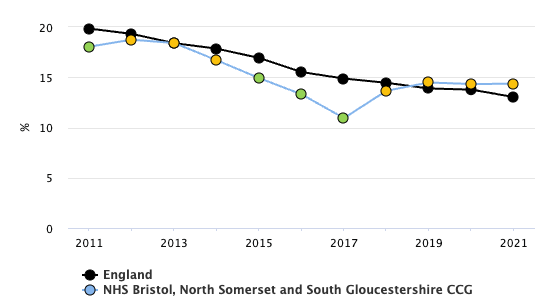
Bristol City Council’s most recent research into smoking rates in the city indicate that in 2022, the rate of smoking adults in Bristol was about 4% higher than the national average, making up a difference of approximately 66,000 people.
Greg McLeod, from Bristol, shared he stopped smoking in the early 90s, when “everybody smoked”, stating that he “was genuinely really poorly and [his] doctor just said ‘it’s time to give it up’”.
Poppy Jackson added she had vaped in the past, however never vaped as a “substitute or to help her quit”, but confidently stated she found vaping a better alternative to smoking.
Recent graduate Megan Wiltshire-Lastrajoli shared that she smoked cigarettes and didn’t like vaping, adding that she found it “more addictive”.
Student Tasha Long, a regular disposable vape user, admitted that for her, the practical benefits and ease of single-use vapes outweighs the environmental favourability of buying a reusable vape.
These findings come soon after the recent announcement of Bristol’s participation in the ‘Swap to Stop’ scheme, where cigarette packs are traded in for vape kits as a ‘less harmful’ alternative.
This measure has received some backlash from medical professionals and school teachers, amongst others, after being accused of promoting vaping, which is still a harmful practice.
Whilst the general consensus amongst Bristolians is that vaping may be a better alternative to traditional cigarette smoking, many shared a sentiment of skepticism about them being healthier altogether. The NHS has publicly stated that “evidence shows that vaping is substantially less harmful than smoking”.