

Trust between robots and humans is greater when they move synchronously, academics at the University of Bristol have found.
Researchers hope that this discovery will help shape emergency services’ response tactics in the future.
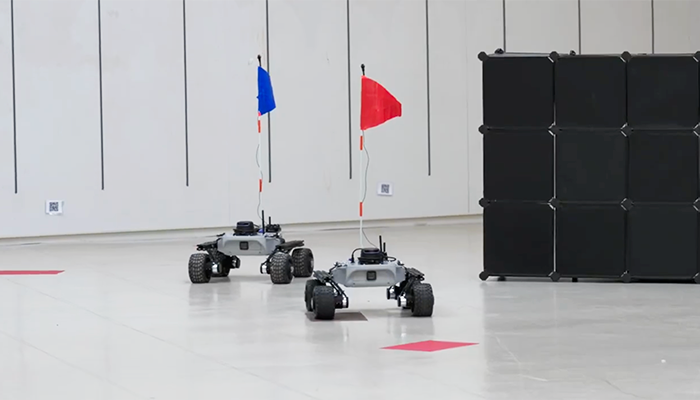
Initially designed to explore Mars, the ‘Leo-robots’ used in the experiment are able to carry thermal imaging cameras to spot fires or to deliver water to extinguish the flames.
In a press release from the University yesterday (November 21st), the academic team shared that they want to conduct further research on the topic. They want to work in the opposite direction to establish how decreased trust can stem from less concurrent movement.
This experiment took place in Sparks, a creative hub based in the former M&S department store, in Broadmead. The research combined the efforts of the general public and mock firefighter robots, where the participants used the robots to scan an area to see if it was safe.
Lead author on the research paper, Dr Edmund Hunt, spoke to Bower News on the future of this research and how he hopes these robots will help shape emergency service responses in the future.
Synchronised movement between #robots and humans can build trust! 🤖👩
— University of Bristol (@BristolUni) November 20, 2024
This discovery could help real-world human-robot teams, such as emergency services to work more effectively with robots in the future. 👨🚒https://t.co/xqmO6v8nLz@BristolUniEng @DrEdmundHunt pic.twitter.com/9hujYaGK09
“In this experiment, we were investigating the factors that might shape humans’ trust in robots, and also investigating the idea that trust is not something that is static. It’s dynamic. It changes over time, during the course of a mission.”
“We’re thinking about a future scenario where the robots would have some level of autonomy. What does trust look like in that situation?”
“It’s more of a challenge to trust. You’re giving the robot some degree of responsibility to carry out tasks without being constantly supervised.”