

A new pilot scheme has been announced this week to provide better support for children’s neurodivergent needs across Bristol, particularly aimed at those waiting for formal diagnosis.
The pilot involves 24 schools and nurseries across Bristol, including Knowle Park Primary School, Air Balloon Primary School and both Oasis Academies.
First trialled in Portsmouth, it has been created in partnership with the Bristol Parent Carer Forum and the Integrated Healthcare Board. The management of the pilot will be overseen by Sirona Care & Health, who run the area’s autism assessment service.
Project partner Barnardo’s emphasises the need for a flexible approach to meeting needs.
Ellie Freeman, Green Councillor and member of the Children’s Policy Committee, said: “Schools in general are struggling with a lack of funding, so when you’re looking at SEN education those resources are stretched even further and a lot of schools really find it hard.
“It’s a very rigid structure in our schools, they have to put a lot of children in the same box and it’s very hard if you don’t fit. The system is quite inflexible and outdated.”
Some parents are frustrated by the hoops they have to jump through to access help. According to the NHS, 89% of those on the waiting list to be assessed have been waiting longer than the recommended 13 weeks. Bristol’s waiting list figures are higher than the national average of 3 years.
Christine Townsend, Green Councillor and chair of the Children and Young People Policy Committee, puts this increased wait time down to austerity and neurodiversity not being treated equally to physical health.
The scheme will focus on removing this need for an official diagnosis to access support, and aim to increase communication and cooperation between parents, schools and the NHS. The Parent Carer Forum say this pilot will highlight gaps in the current system and identify areas that will require further work.
SENDIAS, a Special Educational Needs charity based in the region says: “It can be hard to keep children and young people and their families from ending up in the gaps between services, not knowing where to go for help. It is widely recognised that early identification is key to enabling better access to education and support, and to improving outcomes for children.”
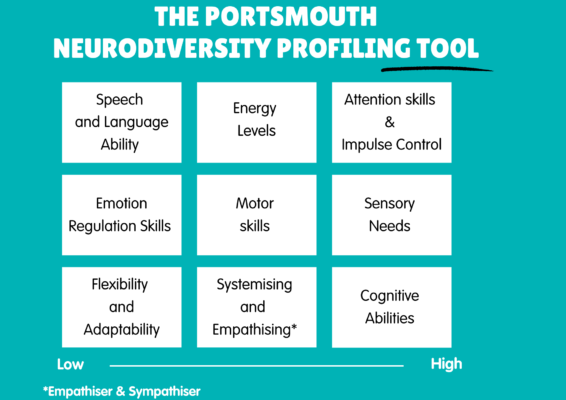
The neurodiversity profiling tool has been created by parent carers, children and young people alongside trained professionals. It looks at nine key areas, including emotional regulation, sensory needs and speech and language ability. Each profile area involves a discussion where children are encouraged to discuss what they may find difficult. The profile can then be used to identify the needs, such as sensory friendly spaces or assistive technology tools.
If successful, Ms Townsend says the health service and Department of Education would be interested in taking on these learnings at a wider level.
Anthony Hill, Service Manager at Barnardo’s, says schemes like this are also about challenging stigma: “[Neurodivergence]…is not a negative, you’re just different… There’s a lot of myths and stigmas around neurodiversity, like you’re not going to achieve, but things are beginning to change”. The charity runs a neurodivergent young people’s council which works with health leaders to voice opinions on how things could be improved.
Bristol’s 2024-2028 SEND inclusion strategy was released by the council earlier this year, emphasising the need to keep neurodivergent children in mainstream education. Part of this involves an effort to upskill all teachers to understand SEN better.
Ms Townsend said: “These are human beings like other human beings. This is the mix of people, this is what it is to be a part of society. So you need to be educated together as you’re going to be working and living together.”