

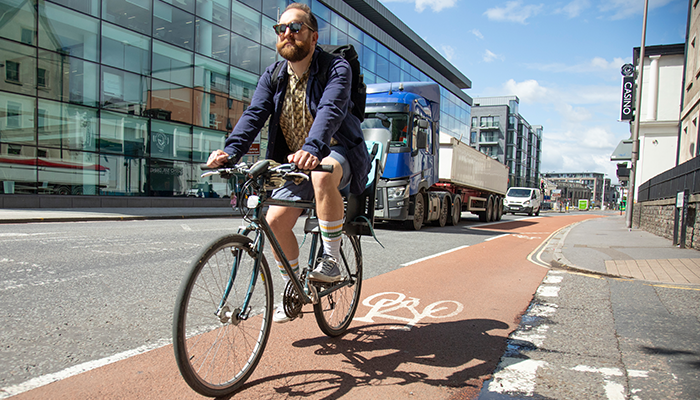
Following the completion of the Park Row works, red cycle lanes are now being considered for other key cycling routes in Bristol.
Bristol City Council says the red surfaces will reduce conflict between cyclists, pedestrians and other road users. It’s part of a new cycleway policy that is being developed.
Councillors will be considering adding more red cycle lanes at a meeting next Thursday 15 May. The surface is high friction and would be on sections of segregated cycle lanes in the city centre.
A trial will be held which will test the effectiveness of the red lanes in reducing conflicts and improving road safety.
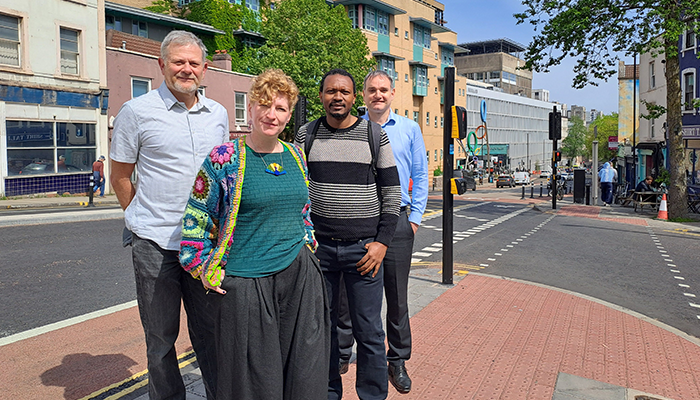
Chair of the Transport and Connectivity Committee, Councillor Ed Plowden said: “I am keen to test this new approach to our cycleways, as it should tell us if using a red surface helps to reduce the number of pedestrians and other road users moving into cycle paths by mistake, before deciding to roll this approach out across the city.
“It would be a significant investment if we decide to update our policy, so careful thought needs to be given to make sure it is effective before we commit to this in the long-term.”
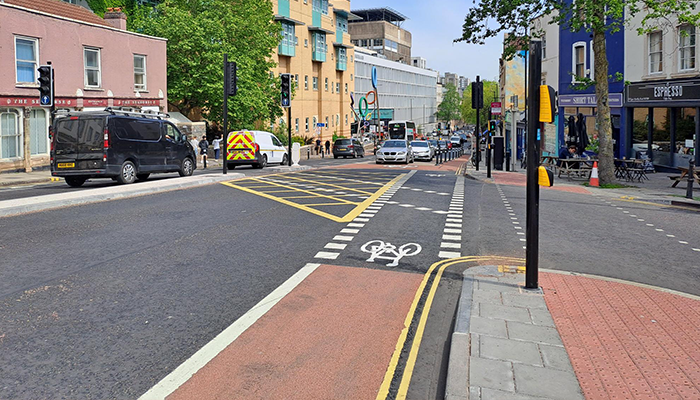
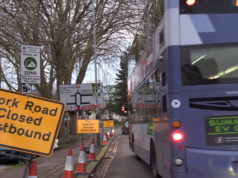
It follows transport improvement works completing on Park Row and surrounding streets, which include an improved cycle lane with red surfacing.
The works cost £3.86 million, taking over a year to complete. It included changes to or adding cycle lanes, crossings, traffic signals, loading bays and disabled parking bays.
Sites being considered for new red cycle lanes include lanes by Old Market and Bristol Bridge. Future proposed cycle lanes might also be considered, such as the planned ones on Anchor Road or College Green.
Other options include Redcliffe Roundabout, Bedminster Bridge and various points on Union Street.
The council say will use data from VivaCity camera sensors to evaluate the options and the trial. The cameras use AI to collect real-time data on traffic modes and traffic flow.
The council have previously used the AI technology to study the effectiveness of closing Bristol Bridge to general traffic in 2021, which became a permanent change after the evaluation.
The red cycle lane trial is expected to cost between £100,000 and £250,000 which will be funded by income from the Clean Air Zone.