

Clean Air Zone campaigners have celebrated the rejection of the proposal to increase Clean Air Zone (CAZ) prices.
The proposal was rejected at a council meeting on November 6. Bristol Clean Air Zone Alliance supported the decision not to consult the public on the issue and instead urged the council to find alternative solutions to combat illegal NO2 levels.
Activist Christina Biggs, speaking on behalf of Bristol Clean Air Zone Alliance, said: “94% of the vehicles are compliant, and they’re going into the Clean Air Zone, and they’re not paying, so that must be where this pollution’s coming from, cars that don’t have to pay the charge but are still polluting.”
She questioned the effectiveness of targeting the 6% of non-compliant vehicles in an attempt to tackle pollution.
Green councillor James Crawford echoed that thinking, saying that his compliant car was “a bit of a banger”, raising questions about the polluting effect of compliant vehicles.
Instead, the Clean Air Zone Alliance believes the solution lies in reducing traffic in the city centre by encouraging and funding public transport, building more Park and Ride facilities, and implementing more active travel measures.
“This is a crazy city,” Ms Biggs explained. “Why the heck have we got an M32 that is injecting cars right into Bond Street? It’s just absolutely mad.”
However, Chair of the Environment and Sustainability Policy Committee, Green councillor Martin Fodor, said the council has a legal duty to clean the air “as fast as possible” and warned that current measures were falling short.
He added that increasing CAZ prices was the fastest and most effective way to achieve clean-air compliance. He argued that keeping the £9 daily charge frozen since 2022 has weakened its deterrent effect.
Initial modelling done by the Council suggested that increasing fees from £9 to £10, £12, or £14 a day, would discourage drivers of non-compliant vehicles from driving in the CAZ.
#Bristol's CAZ is BROKEN! 🚨 Air pollution got WORSE in the "Clean Air Zone," so the council's fix is charging you £14. It's a tax scam that defies physics. Read the exposé!https://t.co/ZLuLE5L2XW pic.twitter.com/mO3Ygy0rnU
— The Almighty Gob Blog (@LangleyAuthor) October 31, 2025
“The model agreed with the government says the biggest step towards compliance would be to index-link the charge,” Cllr Fodor explained. “Pay has gone up, minimum wage has gone up, the level charge is getting less significant for everyone.”
He insisted that the council would continue to expand bus routes and support funds for low-income drivers, but warned that rejecting higher charges could slow progress. Following the rejection of the proposal, he highlighted that “this would slow down the cleaning up of the air and making it legal.”
As outlined in the committee report, monitoring shows NO2 levels on Bond Street and Colston Avenue still exceed the legal limit and modelling suggests Bristol may not reach compliance until 2028 or 2029 without further intervention, but in the end councillors were divided over whether increasing CAZ charges was the most effective solution.
The four Green councillors voted in favour of the proposal, but were outweighed by the five other councillors, three of whom belong to Labour, one to the Liberal Democrats, and one Conservative.
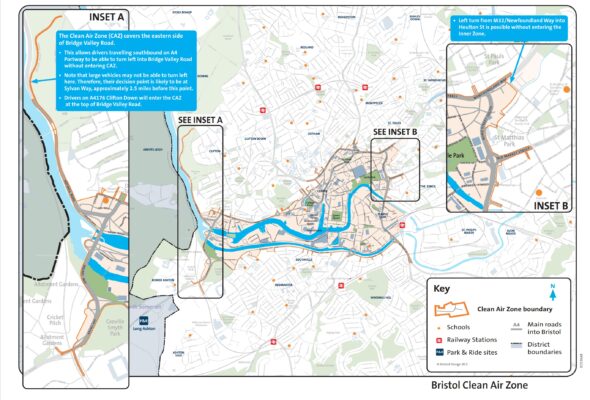
A Bristol City Council report published at the end of October showed that the government-mandated Clean Air Zone, introduced in 2022, has seen NO2 levels fall by 5.1% from 2023 to 2024 inside the CAZ, while areas outside saw a 4.4% decrease.