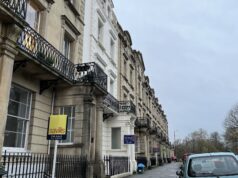


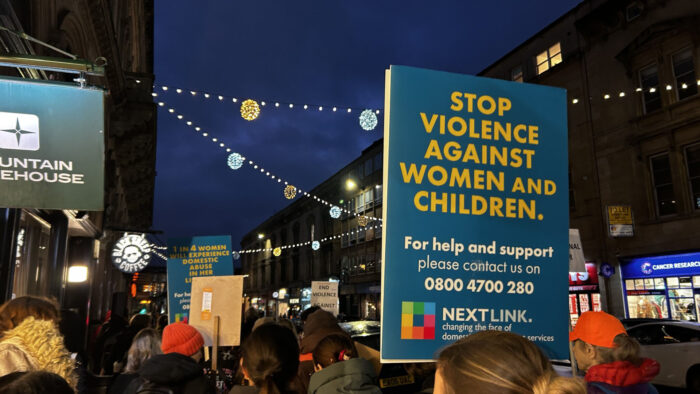
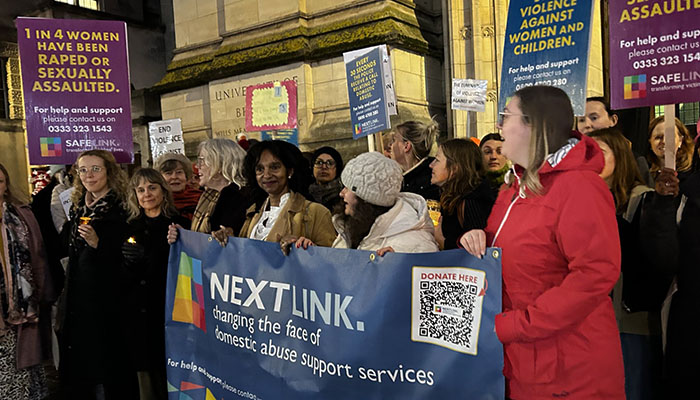
Hundreds of people filled the streets of Bristol in a candlelit march last night, marking the UN’s International Day for the Elimination of Violence Against Women and Girls.
The procession began on Queen’s Avenue and wound its way down Park Street, closing with a vigil on College Green to honour the women who have lost their lives to domestic abuse and sexual violence.
Survivors read poems detailing the horrors of their experience, where others, such as Councillor Carole Johnson pledged to fight for women’s voices in the council.
Organised by Bristol-based charity NextLink Domestic Abuse Services, and supported by Bristol City Council, the event also marked the launch of 16 days of global activism calling for decisive action to end gender-based violence.
“We need to do better.” said Sarah O’Leary, CEO of NextLink. “Demand has gone up for our service year on year. It is concerning that since COVID and since the cost of living, we are seeing not just a huge increase in domestic and sexual abuse, but also in the severity of abuse and harm that’s being caused.”
O’Leary also issued a stark warning about the state of the criminal justice system: “Our criminal justice system is at creaking point. Court delays mean survivors are being supported by us for four, maybe even five, years before cases get to court. It is absolutely shocking, and just causes more trauma.”
She added that the pressures such as the cost of living crisis were also making it increasingly difficult to find safe refuge accommodation for women fleeing violence.
Mimm, Domestic Abuse Community Coordinator at Hartcliffe and Withywood Community Partnership emphasised that domestic abuse is not just a women’s issue, but that it affects families and communities.
“Everyone should be talking about domestic violence,” she explained. “As women, our voices are often dampened, they’re not heard.”
She called for a “whole cultural shift”, explaining that violence doesn’t just begin with physical harm, but with “sexist jokes, being cat-called, and the way that society views women and gender roles.” Survivors, she said, “need to be believed and validated.”
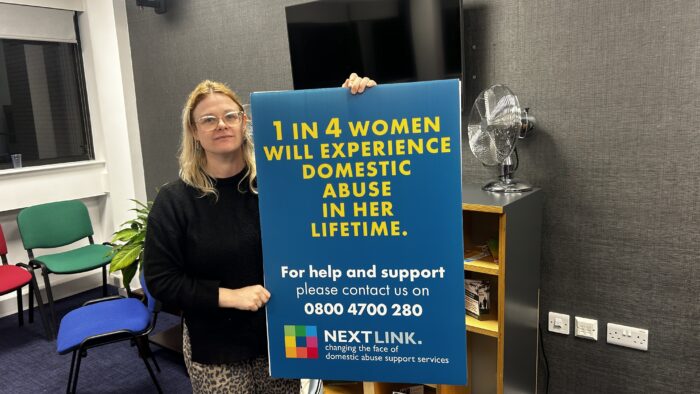

An anonymous survivor who joined the march said she attended to stand with other women, whose experiences often go unheard. “I’m here today to be a part of the voice of women, because I’m part of this community, not by choice.”
“People don’t really talk about abuse, and everyone needs to know about this kind of community,” she said. “I think it’s important to uplift women’s voices, we are so stifled in society.”
“Everyone’s got a story which is the sad part, but also the most empowering part,” she added.
Statistics released earlier this year showed that reports of domestic abuse related incidents and crimes are on the rise in Bristol, reflecting what campaigners described as a worsening national crisis. Although, O’Leary noted that “crime statistics only show us one element, in some ways it’s good that more people feel able to report abuse.”
To end the evening, the crowd observed a minute’s silence, paying respect to not only the women who have lost their lives but also to women who continue to suffer. It is believed that two women every week are killed as a result of domestic violence in England and Wales.
If you, or someone you know, needs help relating to domestic or sexual abuse, visit SafeLink, NextLink or MissingLink