

Alternative market vendors in Bristol are emphasising the importance of alternative trade and keeping markets and fairs alive, fearing business losses due to increasing venue prices, changing consumerism habits, and continuing cost of living barriers.
The Trinity Centre featured Ghoul Gang Collective’s “Fright Club Goth and Alt Art Fayre” this past Sunday 15th November. It hosted 50 local and visiting independent artists. They describe themselves as a “queer, neuro-divergent and artist run event.”

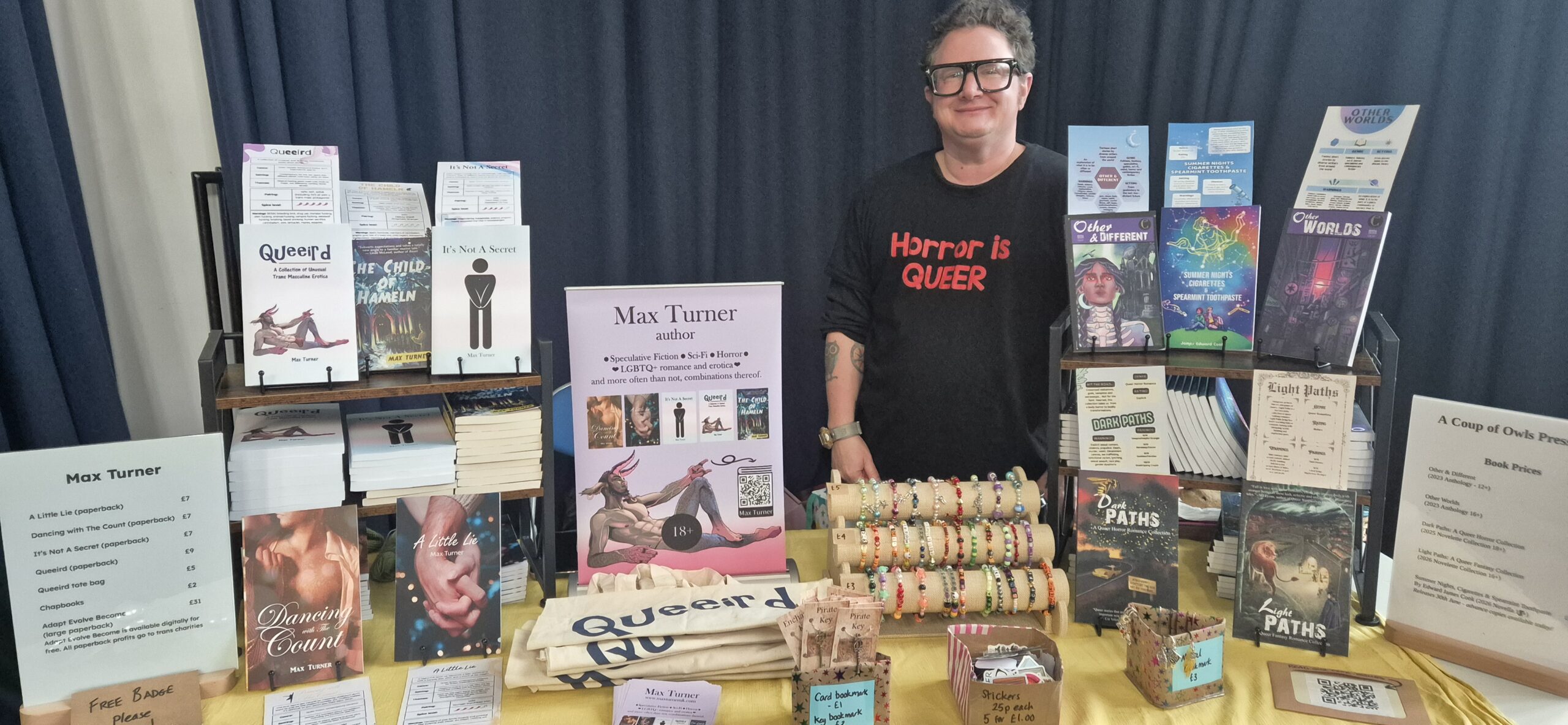
One vendor there, Max Turner, is an author and has an online shop. He says that although all of their books are available online, He “tends to make more on any kind of fair day.”
He says face-to-face trade helps business far more than an online shop can, “because you are interacting directly with customers… it’s as good as having a shop for the day rather than just being available online.”
“Without this, people couldn’t do small businesses and independent creation,” said another vendor, Annabel, “I know there’s a lot of online stores and stuff, but actually getting out, putting it out there for people is so important.”
Turner expressed that one of the biggest problems facing alternative vendors is lack of in-person events to be able to sell, “there’s not always places like this to come in person, so then you are reliant on online sales, and that is getting much harder.”
“I have an online shop, but I don’t think I’ve sold anything from the online shop, it’s places like this [market/fair] that I’ve done most of my business” said Annabel.
Turner said relying on the online market isn’t as easy anymore, “it’s really hard to just market yourself. You used be able to do that a lot through Twitter… we’re not even on Twitter as a press anymore, one because we don’t agree with the ethos of it, and two because we were literally getting nothing out of it anymore, whereas it used to be our biggest form of marketing and promotion.”
He expressed just how crucial in-person markets and fairs are, “without things like this [fair], it just makes it that [much] harder, because you are then just relying completely online, and the digital landscape has just changed so entirely that it’s almost impossible to really market as fully as you used to be able to like even just 5 years ago.”
Another vendor, Athina, also says alternative markets and fairs are “definitely really important” for independent vendors and creators, “when you do markets, you sell a lot more than online, because there a lot more people coming and physically seeing your products.”
Athina said that customers are more likely to buy “in the moment” than “sitting behind their screen at home.”

Another point raised, was that rising venue costs at independent markets and fairs cause loss of profit for small, alternative businesses.
In general, Bristol-based markets cost a lot of money to run. The Bristol City Council website notes that pitches at markets such as Broadmead Market cost £9,273.56 to run annually, and Indies’ Market costs £22.75-£34.12 per trade. Buoy Events, who organise the Harbourside Market, charge 11.5% of gross sales per pitch as well as £6 per day for electric; new traders must pay £55-85 per day for their stall.
Turner says that this fair was “really reasonable”, compared to other independent fairs that tend to be more expensive, “sometimes I’m paying £150 for a table… That’s a huge expense… Some of them are charging £400-500… Sometimes that is because it’s the cost of the venue they’re covering… That is fine as long as it then translates into more foot traffic.”
Athina expressed, “because you’re independent and you’re a small business, you don’t have much money for marketing… The fees that we have to pay… I charge fees for my own markets too, we have to, because the venues charge us money as organisers to put on events.”
She says the rental price for a market spot can make it hard to break even, “sometimes it can be hard to make that back if the market is not very popular, you know, if people don’t turn up.”

The cost-of-living crisis and changes in consumerism habits have also made a significant impact to independent alternative businesses, according to vendors.
Turner said “especially in Bristol, it’s as expensive as London now, it’s insane.”
He continued that the crisis has affected how much customers are “willing to spend” because they are going to look at “anything like a [market/fair] as a luxury.” He explained customers have to “factor” in how much money they can “really put aside for that.”
Furthermore, Turner explained that although he tries to “keep the cost of [his] books down,” materials have increased in price, “the cost of printing has gone up.. Paying the authors, paying the artists.”
He says ideally most of the money would be going to the creators, rather than “spending it all” to make the products, “everything in the industry has gone up so much, so it can be difficult.”
Athina said when she started her brand it went “really well”, but now customers tend to go to events less frequently now, “the amount of money people spend per purchase has definitely dropped… So it is hard, definitely, the effects of it.”
“People are less likely to buy things just on a whim,” said Annabel.
Turner said at some events, vendors “expect a certain number of sales,” with some customers bringing “suitcases to fill up”, but that even in those cases, it isn’t always a high-selling day because some customers “save up” for other events.
Turner expressed that customers that can afford sales, often “choose” not to because they would rather spend their money on “experiences”.
Additionally, Athina raised that vendors frequently travel from far to be able to sell at markets and make money, but that the travel costs impact their income. Many vendors in Bristol are actually based elsewhere; Athina, who lives in Cardiff, says “if you go to a market which is far away, you might not make the money to cover your hotel or petrol.”
The organisers, Ghoul Gang Collective, shared a post on their social media in which a different artist celebrated the event, adding “these are pretty bleak times for a lot of artists.”